
The Teieniwa Vision at Six: Can the Pacific Win Its War on Corruption?
Pacific leaders mark six years of the Teieniwa Vision — their collective pledge against corruption. Integrity institutions have been strengthened, but the structural conditions that breed graft remain intact. The war on corruption is being fought, but it is far from won.
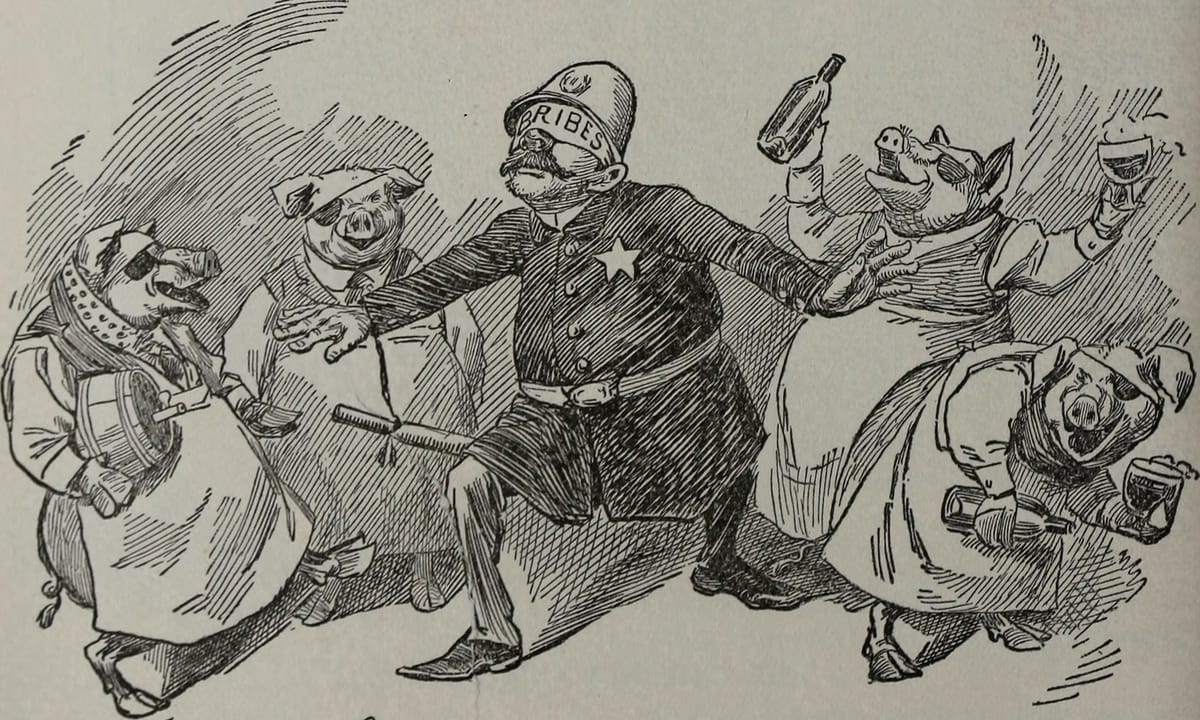
Pacific leaders celebrate six years of anti-corruption commitments. Progress is real but fragile, and the structural incentives that breed corruption remain largely intact.
Six years ago, Pacific Islands Forum leaders adopted the Teieniwa Vision — Pacific Unity Against Corruption — as a collective declaration that good governance, transparency, and accountability are not luxuries for wealthy nations but preconditions for the Pacific’s survival. This week, at a celebration in Suva, Forum Secretary General Baron Waqa and other leaders marked the anniversary with speeches that struck a careful balance between pride in what has been achieved and candour about what remains undone. The message was clear: the Pacific has made progress on anti-corruption, but the war is far from won.
Waqa’s remarks situated the Teieniwa Vision within the broader context of the Forum’s institutional mission. He described it as a milestone in the Pacific’s journey towards good governance and credited it with strengthening integrity systems across member states, despite the compounding pressures of geopolitical shifts, climate change, and the lingering economic effects of the COVID-19 pandemic. The Forum, he said, remains committed to supporting member states through stronger coordination, sustained capacity building, and robust monitoring.
These are not empty claims. Since the Teieniwa Vision’s adoption, several Pacific nations have established or strengthened independent integrity institutions. Ombudsman offices have been expanded. Anti-corruption legislation has been updated in multiple jurisdictions. Regional coordination on asset recovery, mutual legal assistance, and whistleblower protection has advanced, albeit unevenly. Kiribati’s President Taneti Maamau, who has played a leading role in the anti-corruption agenda, noted the establishment of independent integrity bodies and the strengthening of oversight mechanisms as concrete achievements.
Yet the structural conditions that breed corruption in the Pacific have not fundamentally changed. Small populations, concentrated political elites, and limited media ecosystems create environments where patronage networks are difficult to dismantle. In several Pacific nations, the line between public service and private interest is blurred by kinship obligations that are deeply embedded in cultural practice. Anti-corruption advocates in the region are careful to distinguish between cultural reciprocity — which is a legitimate expression of Pacific social organisation — and systemic corruption, which diverts public resources from the communities they are meant to serve. But the distinction is not always easy to maintain in practice.
The influx of development finance and geopolitical attention has introduced new corruption risks. When multiple great powers are competing to fund infrastructure, provide grants, and secure strategic relationships, the opportunities for rent-seeking multiply. Procurement processes come under pressure. Transparency standards that apply to one donor’s funding may not apply to another’s. Chinese-financed infrastructure projects, in particular, have attracted scrutiny in several Pacific nations for opaque contracting practices, though similar concerns have been raised about projects funded by other partners.
The Pacific’s media landscape is a critical variable. Independent journalism is the most effective accountability mechanism available to citizens in any democracy, and in the Pacific, it is under pressure from multiple directions. The Samoa Observer, one of the region’s most prominent newspapers, remains banned. Technology-facilitated threats are silencing Pacific journalists, according to a recent analysis by the Development Policy Centre. Without a robust media ecosystem, integrity institutions lack the public scrutiny that gives them teeth.
Leaders at the Suva anniversary were urged to ensure that integrity agencies are empowered, independent, and adequately resourced. They were encouraged to create safe environments for whistleblowers and to leverage technology to improve transparency in public procurement and financial management. Maamau framed integrity as a moral imperative, arguing that embedding it in leadership is essential to ensuring that resources intended for schools, health systems, and climate resilience actually reach Pacific families.
The geopolitical dimension of the anti-corruption agenda is rarely discussed openly, but is never far from the surface. Corruption weakens governance, and weakened governance creates openings for external actors to exert influence. Pacific leaders understand that maintaining institutional integrity is not only a domestic policy objective but a geopolitical one. A Pacific nation with strong, transparent institutions is harder for any external power — whether Beijing, Washington, or anyone else — to manipulate. In this sense, the Teieniwa Vision is as much a sovereignty strategy as an anti-corruption framework.
Six years is a short time in the life of an institutional reform movement. The Vision has created a shared language, a common set of commitments, and a coordination architecture that did not exist before. But language and architecture are not outcomes. The outcomes are measured in terms of whether public procurement is genuinely competitive, whether whistleblowers are genuinely protected, whether public officials who abuse their positions face genuine consequences, and whether citizens have genuine access to information about how their governments spend public money.
The Pacific’s anti-corruption advocates — the public servants, civil society leaders, journalists, and ordinary citizens who do this work every day, often at personal risk — deserve recognition and sustained support. The Teieniwa Vision gave them a regional mandate. What they need now is the political will and the resources to execute it. That is not a celebration. It is a challenge.