
The Abyss Stares Back: Deep-Sea Mining and the Battle for the Pacific Floor
The Trump administration is fast-tracking permits to mine the Pacific seabed. The American Bar Association, Pacific Island nations, and international law stand in opposition. The most consequential resource battle of the decade is unfolding four kilometres beneath the ocean surface.
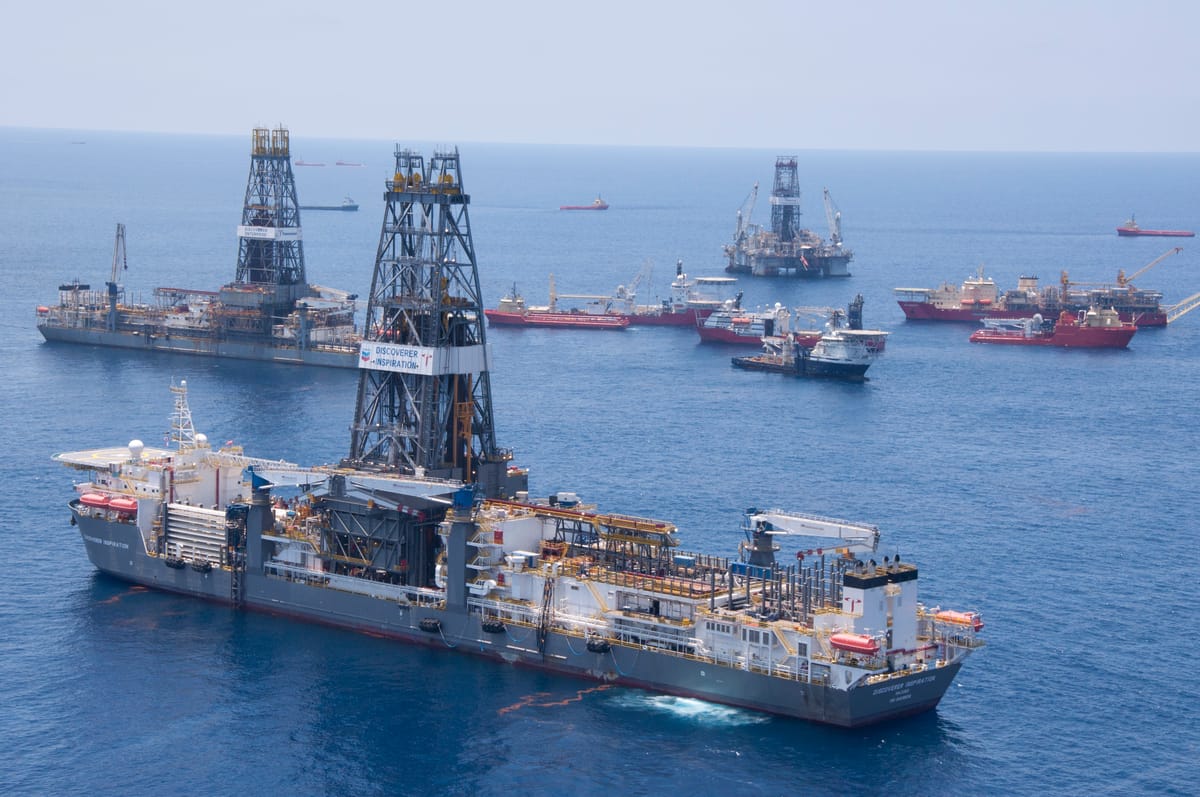
Washington races to mine the ocean. The Pacific pushes back. The fate of the world’s largest commons hangs in the balance.
Four kilometres beneath the surface of the Pacific Ocean, in the perpetual darkness of the Clarion-Clipperton Zone, polymetallic nodules the size of potatoes sit scattered across the seabed like geological confetti. These misshapen black globes contain cobalt, nickel, manganese, and rare earth elements — the raw materials for batteries, semiconductors, electric vehicles, and the entire infrastructure of the energy transition. For decades, they have been objects of scientific fascination and commercial speculation. In 2026, they have become objects of geopolitical confrontation.
The confrontation centres on the Trump administration’s decision to unilaterally fast-track deep-sea mining permits under the Deep Seabed Hard Mineral Resources Act, a largely dormant 1980 statute that allows the United States to issue exploration and commercial recovery licences for mining in international waters. In January, the National Oceanic and Atmospheric Administration finalised new rules that effectively consolidate and accelerate the permitting process. The Metals Company, a Canadian firm and the most advanced commercial operator in the deep-sea mining space, has already filed applications for both exploration licences and a commercial recovery permit covering more than 25,000 square kilometres of the Clarion-Clipperton Zone, southeast of Hawaii.
Simultaneously, the Bureau of Ocean Energy Management has initiated leasing processes for offshore mining near American Samoa and the Commonwealth of the Northern Mariana Islands. NOAA is also conducting a hydrographic survey exceeding 30,000 square nautical miles of federal waters off American Samoa, mapping the seabed as part of the administration’s Offshore Critical Minerals Mapping Plan. These are not tentative gestures. They are the operational architecture of an industry that the United States is determined to build.
The backlash has been swift and multi-directional. The American Bar Association, representing more than 400,000 legal professionals, passed a resolution backing Pacific Island opposition to deep-sea mining. Community groups in American Samoa — whose waters are directly targeted by the BOEM leasing initiative — have mobilised in opposition. National deep-sea mining experts have visited the territory to support community opposition efforts. The Guam legislature has heard testimony from officials who warned that mining decisions are being made without adequate territorial consultation, a pattern they described as emblematic of broader problems with US territorial status.
Internationally, the legal terrain is equally contested. The United Nations Convention on the Law of the Sea designates deep seabed minerals in international waters as the “common heritage of mankind,” administered by the International Seabed Authority. The United States has never ratified UNCLOS but has traditionally been regarded as a state that adheres to many of its key principles. The Trump administration’s decision to issue permits under domestic law for mining in areas governed by the ISA represents a direct challenge to the multilateral framework — and the ISA Secretary-General has said as much, stating that unilateral application of domestic law to the deep seabed violates international law.
China and the European Union have both criticised the US approach, though their positions are complicated by their own interests. China holds exploration contracts with the ISA and has significant refining capacity for the minerals in question. The EU has pushed for stronger environmental safeguards but has not endorsed a blanket moratorium. The Pacific Islands Forum, meanwhile, has adopted increasingly firm language on the precautionary principle, with multiple member states calling for a moratorium on deep-sea mining until adequate scientific evidence demonstrates it can be done without irreparable harm to marine ecosystems.
The environmental stakes are enormous and poorly understood. Scientists have warned that scraping the seabed would destroy habitats that take millions of years to form, kill species that have not yet been catalogued, and generate sediment plumes whose effects on the water column remain unknown. The nodules themselves serve as substrate for communities of organisms uniquely adapted to the deep ocean. Once removed, the ecological clock does not simply reset. The deep sea operates on geological timescales, and the concept of environmental “recovery” as understood on land has no meaningful equivalent at 4,000 metres depth.
For Pacific Island nations, the debate is existential in ways that transcend environmental policy. The ocean is not simply a resource base for Pacific peoples; it is the organising principle of their civilisations. Pacific cultures have navigated, fished, and governed their waters for millennia. The 2050 Strategy for the Blue Pacific Continent frames the ocean as the defining feature of Pacific identity and sovereignty. To have that ocean’s floor carved up by distant corporations operating under the domestic law of a country that has not even ratified the governing international treaty is, for many island leaders, an affront that resonates far beyond the technical questions of mineral extraction.
The Cook Islands occupy a particularly complex position in this debate. Rarotonga has built one of the Pacific’s most advanced regulatory frameworks for seabed minerals and recently signed a non-binding critical minerals cooperation framework with the United States. Prime Minister Mark Brown has been careful to frame this as a sovereign choice that preserves the Cook Islands' control over any future decisions. But the framework’s existence demonstrates the gravitational pull of the US critical minerals strategy: even nations that advocate caution are being drawn into Washington’s supply chain architecture.
The public comment period for the Metals Company’s NOAA application closes on February 23 — a deadline that has arrived with remarkably little public awareness, given the magnitude of what is being decided. If the permit is granted, it would represent the first commercial deep-sea mining authorisation in history issued outside the ISA framework, setting a precedent that other nations could follow. The rules-based international order that Pacific leaders invoke in virtually every diplomatic communiqué would sustain a significant blow.
The deep sea stares back at all of us. What we do with it in the next twelve months will shape ocean governance for generations. The Pacific understands this. The question is whether anyone else does.