
Washington Returns to the Blue Continent: What Landau's Pacific Tour Signals
US Deputy Secretary of State Christopher Landau begins a nine-day tour through Hawaii, Fiji, Tonga, and Samoa. But with deep-sea mining orders and USAID cuts undermining the message of partnership, Pacific leaders are watching for substance behind the symbolism.
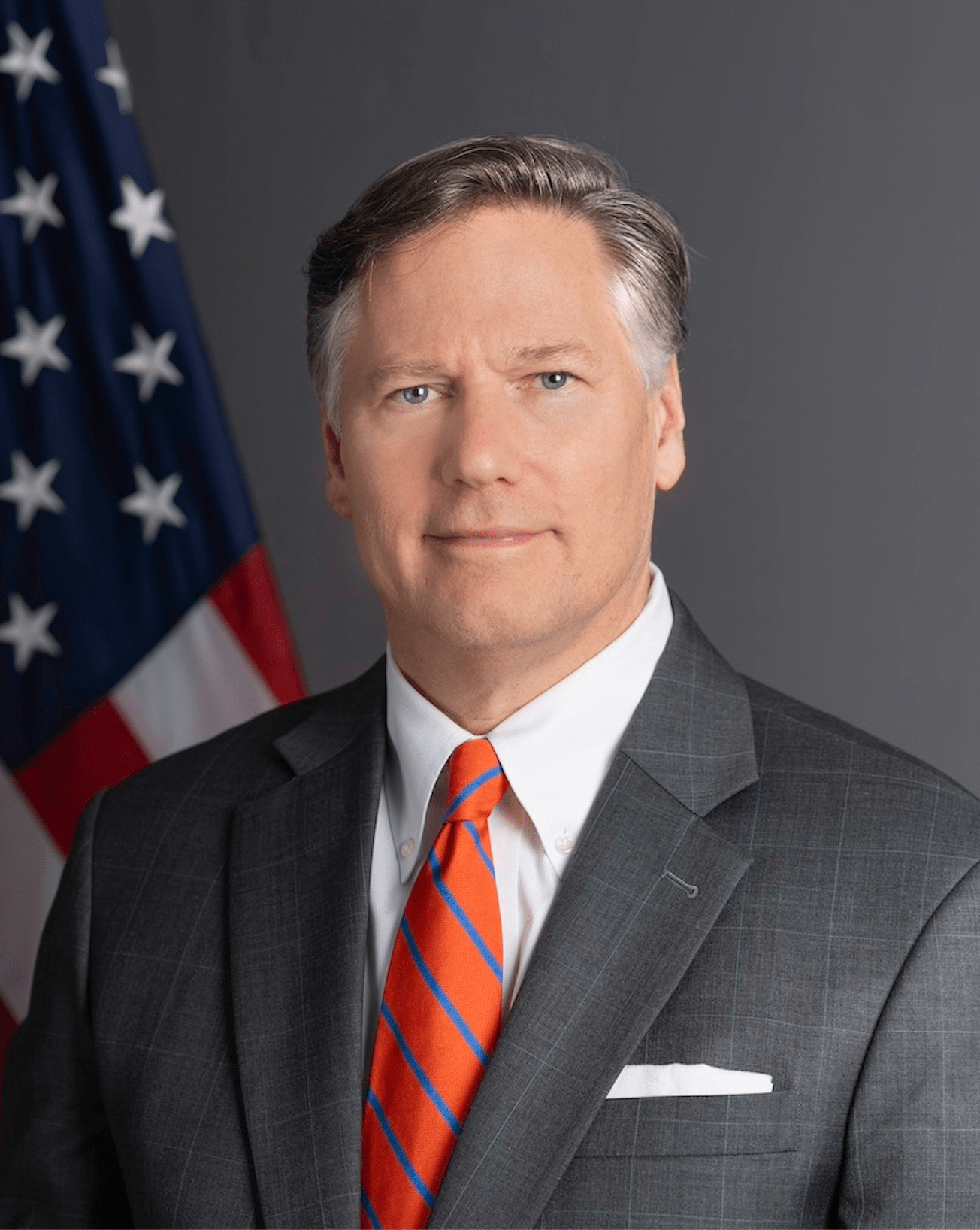
On Saturday, United States Deputy Secretary of State Christopher Landau departed for a nine-day diplomatic tour that will carry him through Hawaii, Fiji, Tonga, and Samoa. On the surface, the itinerary reads like routine statecraft — a senior official pressing the flesh, reaffirming commitments, and checking boxes on the Indo-Pacific strategy. Beneath the surface, the trip is anything but routine. It is the clearest signal yet that the second Trump administration, despite its "America First" instincts, has recognised what strategists in Canberra, Beijing, and Tokyo understood long ago: the Pacific Islands are no longer peripheral to great power competition. They are central to it.
The timing is instructive. Landau's departure coincides with the third Japan–Pacific Islands Defence Dialogue in Suva, Germany's freshly sealed diplomatic relationships with Tonga and Niue, and the ink barely dry on a landmark partnership agreement between the Asian Development Bank and the Pacific Islands Forum. The Blue Continent, as Pacific leaders now insist on calling it, is experiencing a diplomatic traffic jam. For nations long accustomed to being afterthoughts in the foreign ministries of distant capitals, the attention is both welcome and deeply disorienting.
Washington's interest in the Pacific has historically been cyclical, surging in moments of perceived strategic threat and receding when attention migrated elsewhere. The pattern is well known to islanders. The United States built airstrips and supply depots across Melanesia and Micronesia during the Second World War, administered the Trust Territory of the Pacific Islands for decades, and then largely withdrew from active engagement after the end of the Cold War. The free association agreements with the Marshall Islands, Palau, and the Federated States of Micronesia — the Compacts that grant Washington exclusive military access to a vast stretch of the central Pacific — were renewed only after protracted negotiations and public frustration from island leaders who felt they were being taken for granted.
China changed the calculus. Beijing's 2022 security pact with Solomon Islands sent shockwaves through Washington, Canberra, and Wellington. Suddenly, the possibility that a strategic competitor could establish a military or intelligence foothold in the South Pacific — within the defence perimeter that the United States had treated as inviolable since 1945 — was no longer theoretical. The Biden administration responded with a flurry of diplomatic openings: new embassies in Tonga and Solomon Islands, the first Pacific Islands Forum summit hosted by a sitting US president, and pledges of climate finance that, if delivered, would have represented a historic pivot.
The question now is whether the Trump administration will sustain that momentum or allow it to dissipate. Landau's tour is the administration's most visible answer to date, but the signals are mixed. On one hand, the Deputy Secretary's itinerary — Fiji, Tonga, Samoa — hits three of the region's most diplomatically significant capitals. Suva is the de facto hub of Pacific regionalism, home to the Pacific Islands Forum Secretariat. Nuku'alofa has been the site of recent diplomatic friction; Tonga's Prime Minister has publicly called for a reset in US-Tonga relations following what Tongan officials described as heavy-handed American approaches to regional issues. Apia, meanwhile, anchors Polynesia's diplomatic network and hosts multiple UN regional offices. Landau is not visiting backwaters. He is visiting power centres.
On the other hand, the administration's broader policy posture complicates the message. President Trump's recent executive order to fast-track deep-sea mining in the Pacific — issued without meaningful consultation with the island nations whose waters and sovereignty are most directly affected — has generated significant backlash. The American Bar Association has formally backed Pacific opposition to seabed mining. Community groups in American Samoa have mobilised against what they see as an extractive agenda imposed from Washington. For Landau to arrive in the Pacific promising partnership while his president is signing orders that many islanders view as a violation of their sovereign rights creates an obvious tension.
Then there is the matter of USAID. The administration's cuts to the agency have already disrupted climate resilience and governance programmes in Papua New Guinea, and the ripple effects are being felt across the region. Pacific leaders, many of whom spent years building institutional relationships with American development agencies, now find those channels constricting. The irony is sharp: Washington is increasing its diplomatic presence in the Pacific at the same time it is reducing the development infrastructure that gives that presence practical meaning.
Pacific leaders are not naïve about any of this. The region's diplomats have become remarkably sophisticated at navigating great power competition, extracting concessions from multiple suitors without formally aligning with any of them. The Pacific Islands Forum's 2050 Strategy for the Blue Pacific Continent is, at its core, a framework for collective bargaining — a recognition that individual island nations lack the weight to set terms with Washington or Beijing, but that a coordinated bloc of eighteen members controlling vast swaths of the world's largest ocean can command a different kind of attention.
This is the context Landau is walking into. His hosts will be polite. They will be gracious. And they will be watching closely for substance behind the symbolism. Pacific leaders have heard the rhetoric before — the promises of climate finance, the pledges of respect for sovereignty, the assurances that the United States sees the Pacific as partners rather than pawns. What they want now is evidence. They want the Compact funding disbursed without bureaucratic delay. They want the Pacific Resilience Facility — which Tuvalu and Solomon Islands have ratified, and which the Forum has been pushing Washington and the World Bank to support — capitalised with real money. They want their opposition to deep-sea mining taken seriously, not overridden by executive fiat.
Perhaps most importantly, they want consistency. The Pacific's greatest frustration with the United States has never been hostility; it has been indifference. The worst-case scenario for island leaders is not that Washington disagrees with them. It is that Washington forgets about them the moment the next crisis in Europe or the Middle East absorbs American attention. Landau's tour will be judged not by the communiqués it produces but by what follows it — whether the phone calls continue, whether the funding materialises, whether American diplomats show up at the next Forum meeting with something more than talking points.
The Blue Continent now has leverage it has not had in decades. The convergence of climate crisis, geopolitical competition, and resource politics has made these islands matter in ways their leaders always knew they should. Whether Washington truly understands this — whether it grasps that partnership with the Pacific requires listening as much as projecting — remains the open question. Landau's plane has landed. The real test is what happens after it takes off again.