
The Architecture of Resilience: Inside the ADB–Pacific Islands Forum Partnership
The Asian Development Bank and the Pacific Islands Forum have signed a landmark partnership in Suva. With a proposed disaster risk trust fund and an expanded regional office, the agreement promises to align multilateral finance with Pacific sovereignty. Whether it delivers is another question.
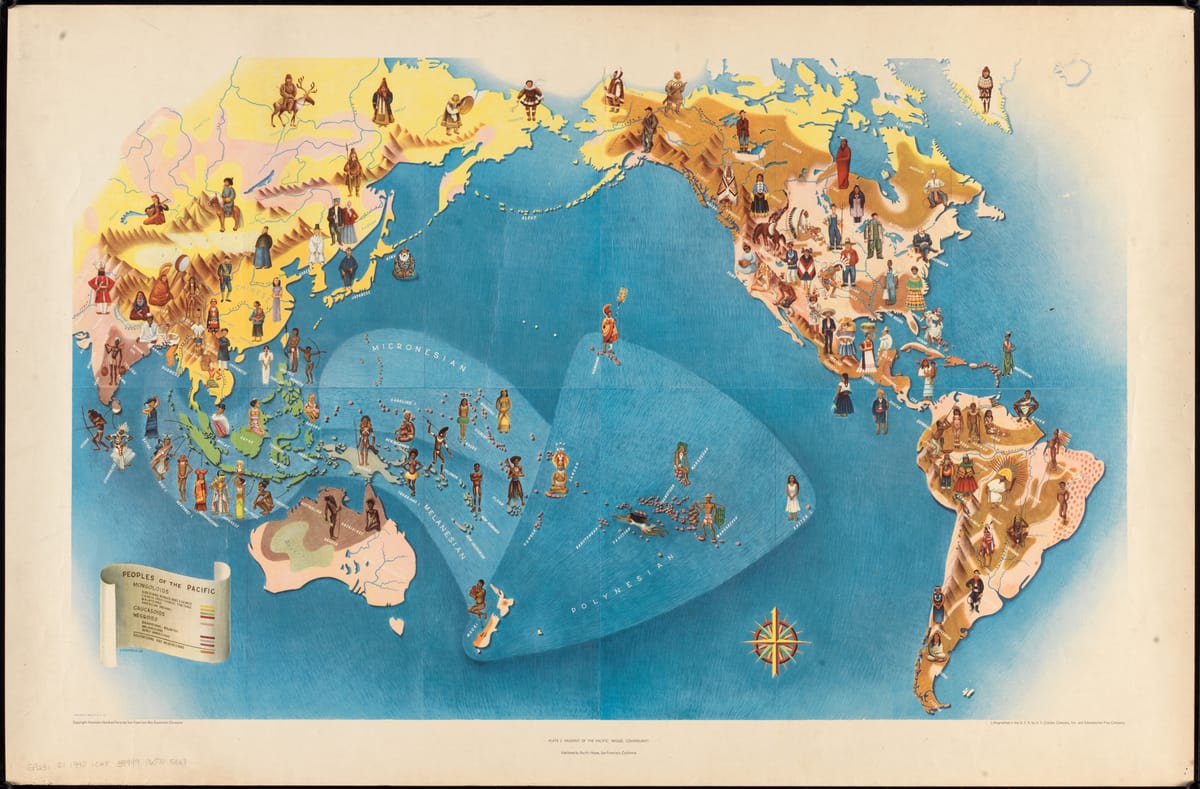
A landmark agreement in Suva promises to align development finance with Pacific sovereignty. The question is whether the multilateral architecture can move as fast as the crises demand.
On February 20, in the Fijian capital of Suva, two men signed a document that few outside the Pacific will have noticed. ADB President Masato Kanda and Pacific Islands Forum Secretary General Baron Waqa put pen to a Partnership Agreement that formalises what both organisations describe as a new foundation for regional cooperation. The ceremony was dignified, the language measured, and the ambition considerable. Whether it amounts to a genuine inflection point in Pacific development finance or simply another layer of institutional choreography will depend on what happens in the months and years ahead.
The partnership is built on a premise that Pacific leaders have been articulating with increasing force: that the geographic dispersal and small economic scale of island nations is not a weakness to be lamented but a structural condition that demands collective solutions. Individual Pacific states lack the domestic revenue base to fund critical infrastructure, the fiscal reserves to absorb climate shocks, and the bureaucratic capacity to negotiate on equal terms with multilateral lenders. Together, through the Forum and its associated mechanisms, they can aggregate demand, harmonise policy, and present development partners with a unified set of priorities rather than eighteen separate wish lists.
The ADB brings substantial institutional weight to this equation. Founded in 1966 and headquartered in Manila, the bank has worked in the Pacific for over five decades, channelling concessional loans, grants, and technical assistance into infrastructure, public financial management, and climate adaptation. Its Pacific portfolio has grown significantly in recent years: Fiji alone has received 1.3 billion US dollars in cumulative ADB commitments since 1972, with roughly half of that total committed since 2020. The expanded Suva office, opened on the same day as the partnership signing, now houses around seventy personnel — more than double the staff of five years ago — serving seven Pacific countries.
The agreement itself focuses on four pillars: economic competitiveness, community resilience and empowerment, disaster preparedness, and the blue economy. Notably, it includes a proposed multi-donor trust fund for disaster risk financing, a mechanism that could, if capitalised adequately, provide rapid disbursement following cyclones, floods, or other shocks without requiring the lengthy negotiation and approval processes that have historically delayed relief to Pacific communities.
The trust fund concept addresses a real gap. The Pacific Resilience Facility, championed by the Forum and already ratified by Tuvalu and Solomon Islands, has struggled to attract commitments from major donors despite years of advocacy. The ADB’s involvement could lend institutional credibility and mobilise capital from member states who might be reluctant to fund a Forum-led mechanism directly. If the trust fund becomes a complement to the Resilience Facility rather than a competitor, it could represent meaningful progress. If it becomes a substitute, the politics will be complicated.
There is also the matter of what the partnership means for ADB’s positioning relative to other players in the Pacific development space. The bank is not operating in a vacuum. China’s development financing, delivered through bilateral loans, Belt and Road infrastructure projects, and direct government grants, has grown substantially across Melanesia and parts of Micronesia. Australia’s Pacific Step-up and its successor policies have directed billions into the region. Japan’s development assistance, coordinated through JICA, remains significant, and New Zealand’s aid programme is tightly integrated with Pacific priorities. The ADB’s value proposition rests on its multilateral character, its technical expertise in public financial management, and its ability to blend grant financing with concessional lending in ways that bilateral donors cannot easily replicate.
The submarine cable deal signed two days before the partnership ceremony illustrates the bank’s operational approach. ADB provided a financing package to support the construction of the 411-kilometre Tamtam cable connecting Port Vila, Vanuatu, to Lifou, New Caledonia. Submarine connectivity is not glamorous, but it is foundational. Without reliable internet, Pacific nations cannot participate meaningfully in the digital economy, deliver e-governance services, or even maintain the meteorological data systems that underpin disaster early warning. This is the kind of infrastructure that the ADB is well positioned to finance and that bilateral donors often neglect because it lacks the visibility of, say, a new hospital or a road.
Kanda’s rhetoric during the signing ceremony was carefully calibrated. He emphasised unity, collective action, and the need to “think bigger and move faster.” Waqa, for his part, framed the partnership in the language of the 2050 Strategy for the Blue Pacific, stressing that any cooperation must deliver “Pacific-led solutions.” The phrase matters. Pacific leaders have grown wary of development frameworks that are designed in Washington, Tokyo, or Manila and then presented to island nations for endorsement. The 2050 Strategy was the region’s assertion that it would set its own development agenda, and any external partner — including the ADB — would need to align with that agenda rather than the other way around.
The test of this alignment will come in implementation. Institutional partnership agreements are common in the development world; many produce frameworks, working groups, and coordination mechanisms without materially changing the velocity or direction of financing. The Pacific’s needs are urgent and concrete: fiscal buffers against climate shocks, digital connectivity, renewable energy infrastructure, and the institutional capacity to manage all of it. The ADB–PIF agreement provides the scaffolding. Whether anyone builds on it remains to be seen.
What is clear is that the Pacific’s development architecture is becoming denser, more multilateral, and more contested. Every major power and institution wants to demonstrate its commitment to the Blue Continent. For island leaders, the proliferation of partnerships and frameworks creates both opportunity and exhaustion. The opportunity lies in leveraging competition among donors to extract better terms, faster disbursement, and greater local ownership. The exhaustion comes from managing an ever-expanding calendar of summits, signing ceremonies, and dialogue mechanisms — all of which consume the limited bureaucratic bandwidth of governments that may have only a handful of qualified officials to cover the entire spectrum of development, diplomacy, and defence.
Suva, increasingly, is becoming the place where these competing ambitions converge. The ADB’s expanded office, the Forum Secretariat’s headquarters, and a growing ecosystem of UN agencies, NGOs, and diplomatic missions are all clustered in Fiji’s capital. The question for the Pacific is whether this concentration of institutional attention will translate into the resilience that island communities actually need — or whether it will simply produce more architecture.